2026-11-06 · Fred Harlan
Protecting Outdoor Faucets and Pipes During North Florida Cold Snaps
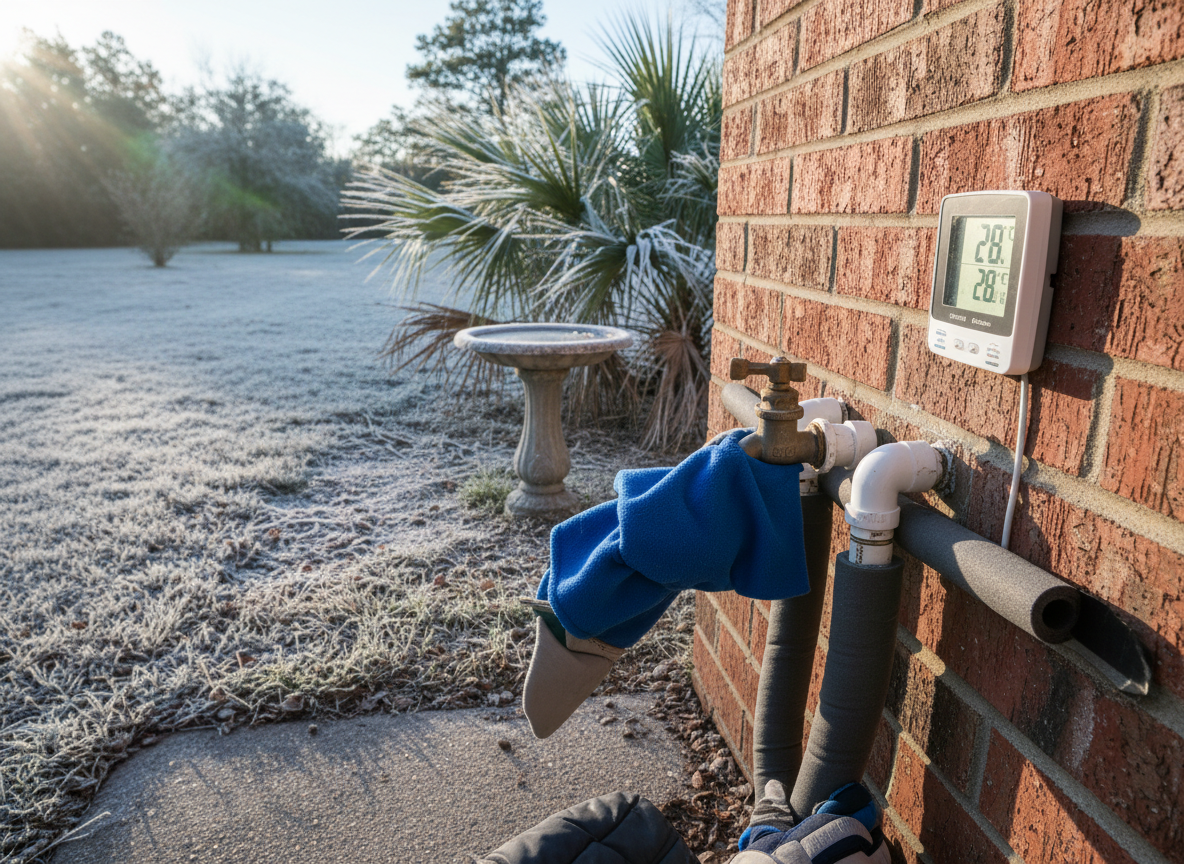
Wrapping outdoor faucets with foam covers and shutting off interior shutoff valves before temperatures fall below 32°F keeps pipes intact during Gainesville cold snaps. Homes built before 1980 in neighborhoods such as Duckpond and University Heights often have older galvanized lines that lose heat faster than modern PEX runs in Haile Plantation. Disconnecting garden hoses and draining the lines removes standing water that expands when it freezes, a common issue after mild winters give way to sudden drops. Residents near Paynes Prairie Preserve State Park notice the same pattern because open terrain lets cold air settle quickly at night.
Reading Local Winter Patterns in Alachua County
Gainesville sits in a humid subtropical zone where winters stay mild most years yet dip into the 20s for one or two nights each January. These brief cold snaps arrive after warm spells, catching pipes that still hold summer heat. Downtown and Magnolia Park blocks with narrow setbacks place exterior spigots close to north-facing walls that radiate heat poorly. In contrast, larger lots in Northwest Gainesville allow more airflow, so pipes cool faster once the sun sets. Checking the forecast from the Florida Museum of Natural History weather station gives a reliable 24-hour warning before the first freeze.
Step-by-Step Faucet Protection Used by Local Plumbers
Start at the interior shutoff valve, usually located under the kitchen sink or in the garage, and turn it clockwise until it stops. Open the outdoor faucet to release remaining pressure, then leave it open so any residual water can expand without splitting the line. Slide a 6-inch foam faucet cover over the spigot and secure it with a zip tie so wind cannot pull it loose. In University Heights bungalows, repeat the process for every exterior hose bib, including those on the side of detached garages. Store disconnected hoses indoors rather than coiled against the foundation where overnight lows reach the upper 20s.
Insulating Exposed Pipes Around Ben Hill Griffin Stadium and Beyond
Pipes running along crawl-space walls or under raised porches in Magnolia Park need pipe insulation sleeves at least ½-inch thick. Wrap the sleeves with heat tape rated for outdoor use on any line that travels more than 3 feet from heated space. Homeowners near the University of Florida campus often run the tape along the supply line to second-floor bathrooms because those runs sit against uninsulated exterior walls. After installation, test the system by turning the water back on and checking for drips at every joint. If a line still freezes, call a plumber for emergency plumbing rather than attempting to thaw it with an open flame.
Checking for Damage and When to Call for Leak Detection
After the cold snap passes, walk the perimeter and look for wet spots or frost rings around outdoor faucets. A small drip at the packing nut can be tightened with an adjustable wrench, but persistent moisture usually means the seat washer has cracked from expansion. Homes in Lake City or Ocala that share the same limestone soil report similar failures after freezes because the ground shifts slightly when surface water refreezes. If interior walls feel damp or the water meter spins with all fixtures off, schedule leak detection before the next cold front arrives. Early repair prevents larger issues that later require sewer line repair once spring rains raise the water table.