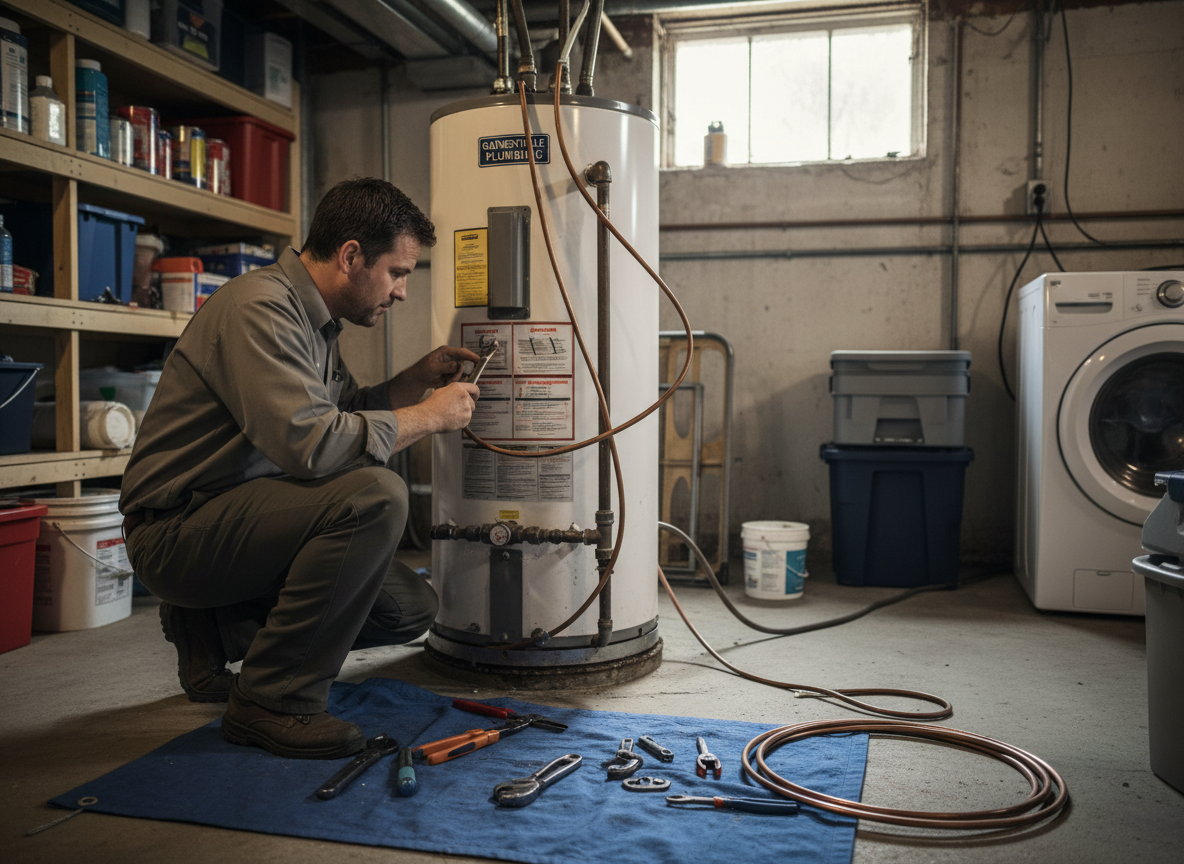
Gainesville's humid subtropical climate with hot summers drives faster sediment buildup in water heaters, especially in homes built before the 1990s in Downtown and University Heights. Mineral-rich groundwater common across Alachua County leaves scale on elements and tanks, shortening life and causing inconsistent hot water. Technicians here routinely pull access panels on 15- to 25-year-old units and find collapsed dip tubes or scaled elements that require full replacement rather than simple cleaning.
Electric water heaters dominate single-family homes in Magnolia Park and Northwest Gainesville, while gas units appear more often near the University of Florida campus where larger households demand higher recovery. Corrosion at the anode rod and upper element threads is a frequent failure point because of the area's mild winters that never fully flush cold incoming water. Replacing only the element without checking the rod often leads to repeat leaks within months.
Paynes Prairie and Haile Plantation homes sit on slightly different soil profiles that affect slab leaks and water heater pan drainage. When a tank fails, code requires proper expansion tank sizing and dielectric unions on copper lines to prevent galvanic corrosion. Skipping these steps during repair creates callbacks when new lines start weeping within a year.
Service calls from nearby Lake City and Ocala residents sometimes involve units already stressed by longer pipe runs and harder water, making Gainesville techs double-check thermostat calibration and venting on every gas job.
Technician insight
In Gainesville the thing that catches most people out with water heater repair is skipping the anode rod check on tanks in 1970s–1980s homes around the University of Florida; the mineral water here eats through the rod in six to eight years and the tank starts leaking from the top seam before the homeowner notices any temperature change.
Duckpond Electric Tank Failure
Homeowner in Duckpond reported lukewarm water on the second floor. Inspection showed the upper element completely scaled over from years of untreated sediment. We replaced both elements, flushed the tank, and installed a new anode rod. Hot water returned immediately and the homeowner was advised to schedule annual flushes given the local water chemistry.
Water Heater Repair Services We Offer
✓Electric Element Repairs
Replace burned-out upper or lower elements and test thermostats on standard residential electric tanks common in Duckpond and Magnolia Park homes.
✓Gas Control Valve Repairs
Diagnose and replace faulty gas valves, thermocouples, and pilot assemblies on units serving larger households near the University of Florida.
✓Anode Rod Inspection and Replacement
Pull and inspect the anode rod on tanks over ten years old to prevent tank corrosion accelerated by Alachua County groundwater minerals.
✓Sediment Flush Services
Drain and flush tanks to remove scale buildup that reduces efficiency during Gainesville's long hot summers.
✓Thermostat Replacement
Swap failed thermostats that cause water too hot or too cold, a common issue in older University Heights properties.
✓Pilot Light Troubleshooting
Restore pilot lights and adjust gas pressure on units affected by humidity and occasional pressure fluctuations from local supply lines.
Water Heater Repair Cost in Gainesville, FL
| Service | Typical Range | What Affects It |
|---|---|---|
| Electric element replacement | $180–$320 | Price rises with upper and lower element pairs or difficult access in attic installs |
| Gas control valve replacement | $250–$450 | Higher end applies to power-vent models or when venting adjustments are required |
| Anode rod replacement | $140–$260 | Includes flush; older tanks in Downtown may need tank inspection first |
| Thermostat or pilot repair | $160–$290 | Varies by whether gas or electric and part availability same day |
Ranges are typical for Gainesville, FL and confirmed with an exact written quote before any work starts.
How it works
- 1
Initial Assessment
Arrive on site, shut off power or gas, and drain several gallons to check sediment levels and element condition.
- 2
Component Testing
Use multimeter on electric units or manometer on gas units to isolate the failed part before any disassembly.
- 3
Part Replacement
Install new element, valve, or rod using dielectric fittings and verify proper torque on connections.
- 4
System Verification
Refill, restore power or gas, check for leaks, and confirm temperature recovery matches the tank size.
Pricing
Repairs on Gainesville water heaters typically range from $150 for simple element swaps to $550 when valves or multiple components are needed.